Geotechnical Investigation and Soil Survey Equipment
Learn what geotechnical investigation is, why it is performed and which equipment is used in soil surveys, including drilling rigs, SPT tools, core barrels and sampling equipment.
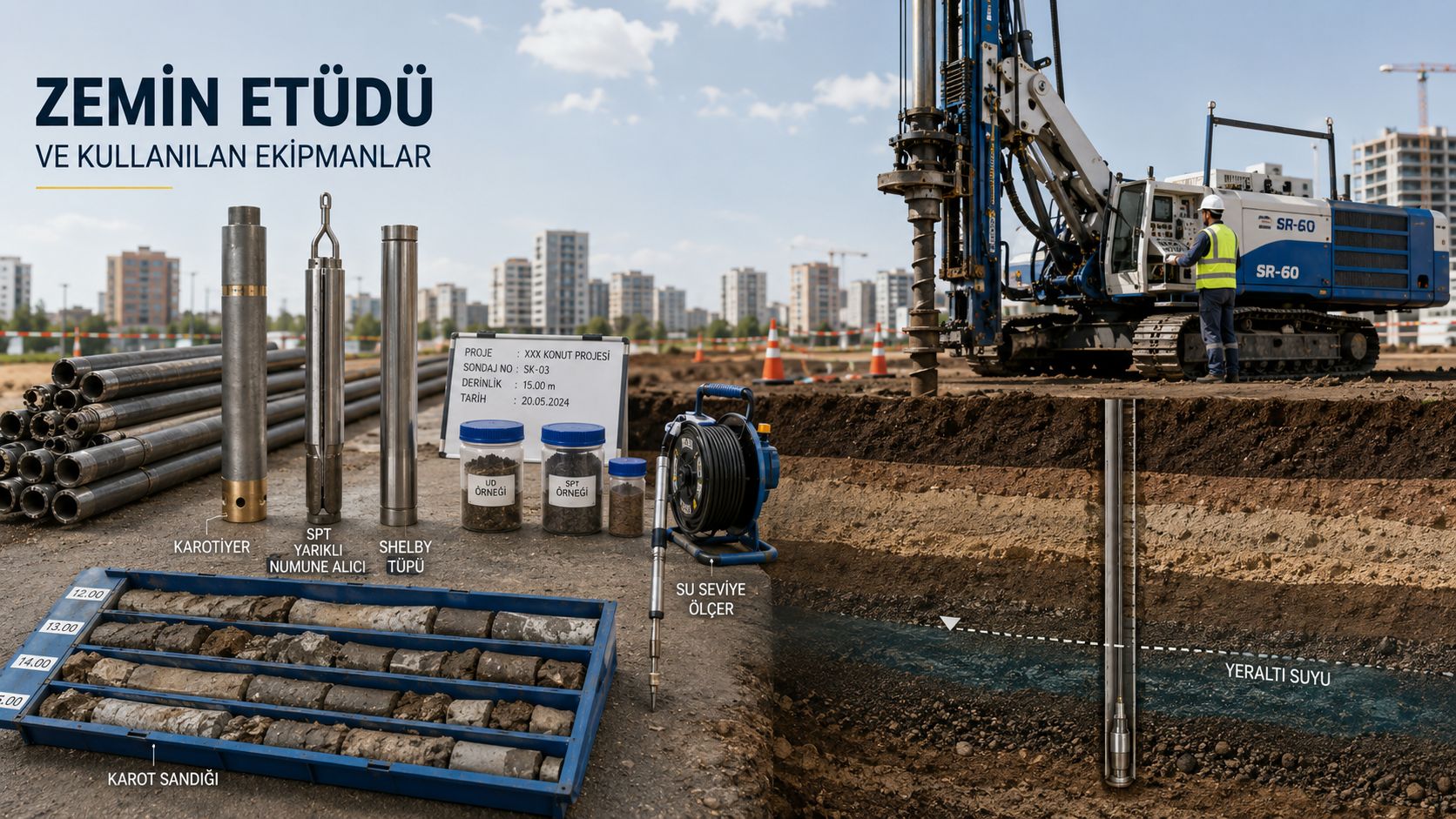
What Is Geotechnical Investigation?
Geotechnical investigation is a technical study carried out to understand the underground conditions of a construction site. It helps determine soil bearing capacity, layer structure, groundwater level, rock or soil properties and possible ground-related risks.
Before constructing a building, bridge, factory, road, dam or retaining wall, it is necessary to understand how the ground behaves. Not all soils are the same. Even within the same area, ground conditions can change within a few meters. One point may contain hard rock, while another may include fill material, loose sand, clay or water-saturated soil.
Geotechnical investigation reduces this uncertainty before the project begins. Foundation type, excavation method, bearing capacity and possible ground improvement needs are evaluated based on the data obtained from the investigation. For this reason, a soil survey should not be seen only as a formal requirement. When done properly, it provides essential technical information for safety, cost control and long-term performance of the structure.
Why Is Geotechnical Investigation Performed?
The main purpose of geotechnical investigation is to determine whether the planned structure can safely transfer its loads to the ground. No matter how well a project is designed on paper, a reliable foundation design cannot be made without knowing the actual ground conditions.
Geotechnical investigation is performed to:
- Determine soil bearing capacity
- Examine underground layers
- Identify groundwater level
- Collect soil or rock samples
- Evaluate liquefaction risk
- Understand settlement and differential settlement risk
- Provide technical data for foundation design
- Determine excavation and shoring requirements
- Check whether ground improvement is needed
- Evaluate ground behavior under earthquake effects
A site may look stable from the surface, but the deeper layers can tell a different story. This is why visual inspection alone is never enough. The real character of the ground is understood through drilling, sampling and field tests.
How Is Geotechnical Investigation Carried Out?
Geotechnical investigation is prepared by evaluating both field studies and laboratory tests together. First, the project area is reviewed. The type of structure, footprint, number of floors, foundation loads and regional geological conditions are considered. Then drilling points are determined and boreholes are opened at the site.
During drilling, samples are taken from different depths. When necessary, field tests such as SPT, pressuremeter tests or plate load tests are performed. The collected samples are then tested in a laboratory. Finally, all data is evaluated and presented in a geotechnical report.
A typical process includes:
- Reviewing the project area and structure information
- Determining borehole locations
- Setting up the drilling rig on site
- Drilling to the required depth
- Collecting soil or rock samples
- Performing field tests
- Testing samples in the laboratory
- Preparing the soil profile and technical data
- Providing foundation and ground-related recommendations
For this process to be reliable, both proper equipment and an experienced field team are required. A small mistake during fieldwork can affect the quality of the final report.
Importance of Drilling in Geotechnical Investigation
Drilling is one of the most important methods used in geotechnical investigations because it provides direct information about underground conditions. Through drilling, soil layers, rock depth, groundwater level and sample properties can be determined.
It is often impossible to understand ground conditions only by looking at the surface. Drilling becomes even more important in filled areas, riverbeds, loose alluvial soils, fractured rock zones and locations with high groundwater levels.
Soil drilling helps identify:
- Layer thicknesses
- Soil type
- Rock depth
- Groundwater level
- Sample properties
- SPT values
- Core quality
- Fracture and weathering conditions
- Suitable foundation depth
These details form one of the most important parts of a geotechnical report. Without proper drilling, reliable geotechnical evaluation becomes difficult.
Main Equipment Used in Geotechnical Investigation
Geotechnical investigation requires several pieces of equipment working together. The equipment used may vary depending on soil type, target depth, project scope and required field tests.
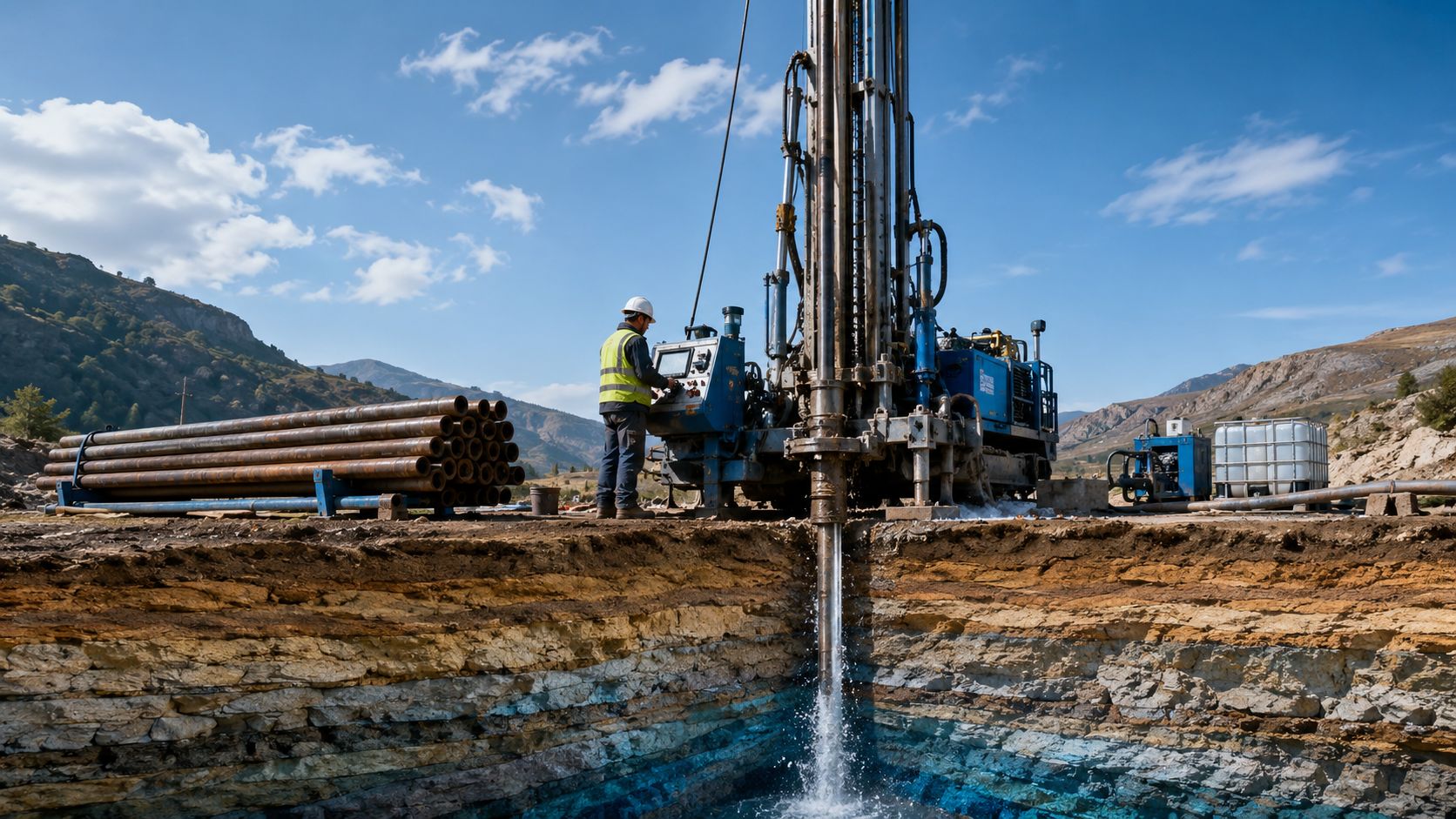
Soil Drilling Rig
The soil drilling rig is the main piece of equipment used in field investigations. It opens boreholes at determined points and allows the team to reach the required depth through soil or rock.
Drilling rigs used in geotechnical investigations can be crawler-mounted, truck-mounted or compact machines. Smaller rigs are preferred in narrow urban sites, while stronger rigs are used in open and difficult terrain.
The task of the drilling rig is not only to open a hole. It also supports sampling operations, SPT testing and core drilling when rock layers are encountered.
The right drilling rig is important for:
- Reaching the target depth
- Working in different soil conditions
- Carrying out sampling properly
- Maintaining field safety
- Reducing time loss
- Ensuring compatibility with other equipment
If a rig with insufficient capacity is used, drilling slows down, sample quality decreases and reaching the required depth may become difficult.
Drill Rods
Drill rods transfer rotation and pressure from the drilling rig to the drilling bit or sampling equipment. As drilling progresses, rods are added one by one to increase depth.
In geotechnical drilling, rod strength and connection quality are important. Drill rods are exposed to rotation, pressure, pulling force and vibration throughout the operation. In deeper boreholes, low-quality rods may cause connection problems, bending or breakage.
Important points in drill rod selection include:
- Diameter and length compatibility
- Thread quality
- Material strength
- Resistance to bending
- Compatibility with the drilling system
- Corrosion resistance
The more stable the drill rod system is, the more controlled the drilling operation becomes.
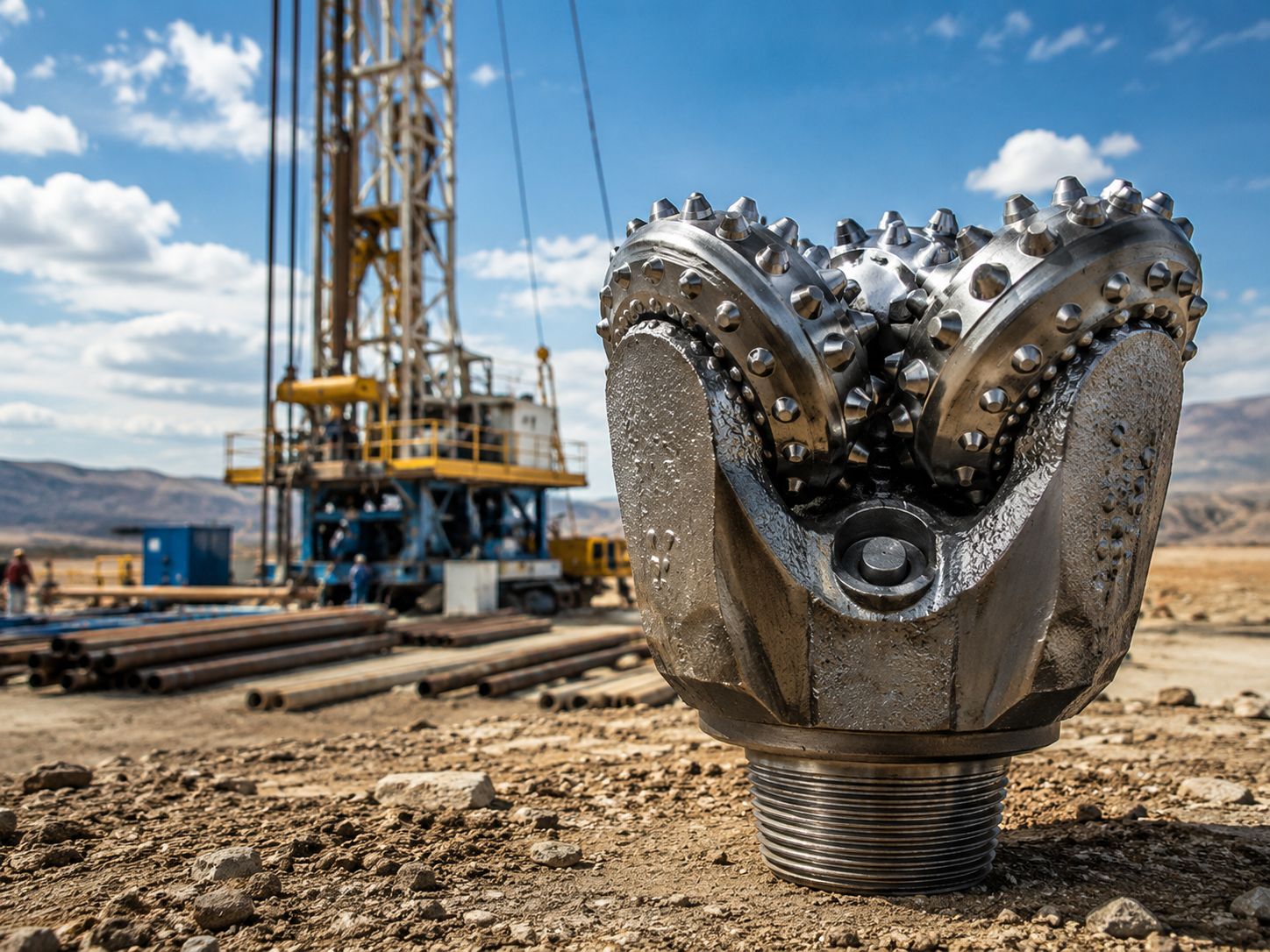
Drilling Bits and Tools
Drilling bits used in geotechnical investigations are selected according to the ground type. The same bit cannot be used efficiently in soft soil, clay, sand, gravel, hard rock or weathered rock. Wrong bit selection reduces penetration speed and affects sample quality.
Drilling bits cut, break or wear down the formation. In some cases, diamond bits are used for core recovery, while in other ground conditions different types of drilling tools are preferred.
Important criteria in bit selection include:
- Soil type
- Rock hardness
- Abrasiveness
- Borehole diameter
- Sampling requirement
- Drilling method
- Circulation system
When the correct bit is used, the rig works more smoothly, drilling becomes more stable and the operation takes less time.
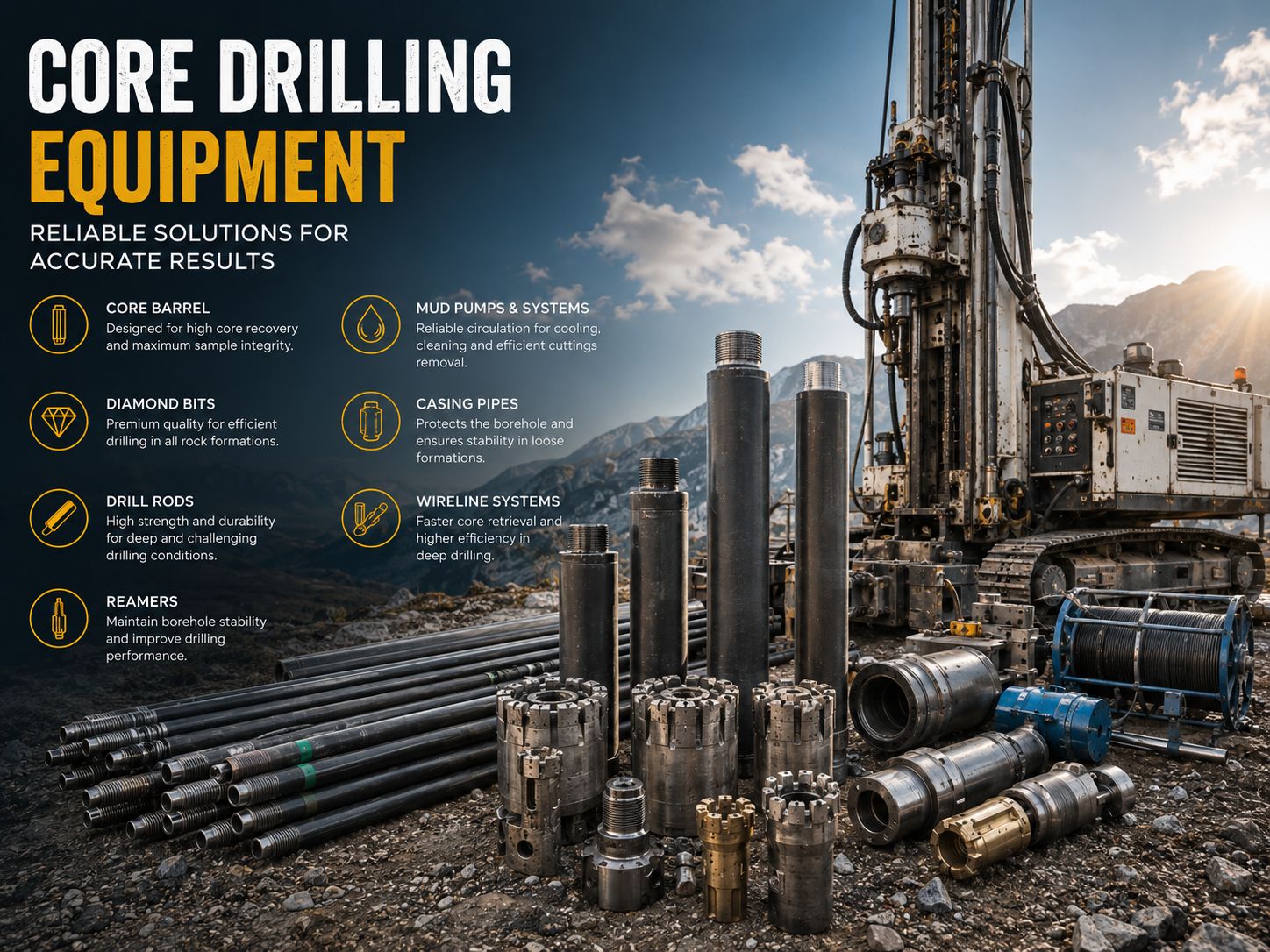
Core Barrel
A core barrel is used to collect cylindrical samples from rock or hard soil layers. These samples are called cores. Core samples allow engineers and geologists to examine the natural structure of rock or hard ground more clearly.
In geotechnical investigation, the core barrel is usually used when rock units are encountered. The recovered core can be examined for rock type, weathering degree, fracture structure, discontinuities and strength properties.
The core barrel provides several advantages:
- Shows rock structure directly
- Reduces sample loss
- Helps examine fractures and layers
- Provides suitable samples for laboratory tests
- Supports a more accurate soil and rock profile
The quality and suitability of the core barrel directly affect the reliability of the recovered sample.
SPT Equipment
SPT, or Standard Penetration Test, is one of the most widely used field tests in geotechnical investigations. It provides information about the density or consistency of the soil. It is commonly applied in sandy, silty and clayey soils.
In the SPT test, a standard sampler is driven into the ground using a hammer of known weight. The number of blows required for certain penetration intervals is recorded. These values give an idea of soil resistance.
SPT equipment generally includes:
- Standard split spoon sampler
- Hammer system
- Guide rods
- Blow count measurement system
- Connection components
SPT results are commonly used in foundation design, bearing capacity calculations and liquefaction assessments. For reliable results, the equipment must comply with standards and the test must be performed correctly.
Shelby Tube
A Shelby tube is a thin-walled sampling tube used to obtain relatively undisturbed samples from soft and cohesive soils. It is commonly used in clay and silt layers where laboratory testing requires samples close to their natural condition.
An undisturbed sample reflects the in-situ behavior of the soil more accurately. This is important for consolidation, triaxial compression and similar laboratory tests.
Shelby tubes are used to:
- Obtain quality samples from soft soils
- Preserve the natural structure of the sample
- Provide suitable material for laboratory tests
- Support settlement and strength analysis
If the Shelby tube is used incorrectly, the sample may be disturbed. Therefore, its application requires care and experience.
Sample Containers and Protection Materials
Proper storage of samples is as important as collecting them. Samples must reach the laboratory without losing their properties. Moisture content, sample disturbance and mixing must be controlled.
For this purpose, sample bags, plastic containers, core boxes, labels and protective packaging materials are used. Each sample must be clearly marked with borehole number, depth and date.
Important points in sample protection include:
- Samples should not be mixed
- Depth information must be written correctly
- Cores should be placed in order
- Moisture loss should be prevented
- Sample containers must be strong
- Transport to the laboratory should be careful
A good sample collected in the field can lose its value if it is stored or transported poorly.
Core Box
A core box is used to store recovered core samples in an organized way. Cores are placed in the box according to depth order. This makes it easier to examine geological transitions and rock structure.
Core boxes can be made of wood, plastic or metal. The important point is to protect the cores without mixing, breaking or losing their order.
Core boxes are important for:
- Organized storage of core samples
- Easy depth tracking
- Preventing sample loss
- Supporting laboratory and engineering review
- Helping photography and reporting
Incorrect placement in the core box can make interpretation of the soil and rock profile difficult.
Water Level Meter
Groundwater level is one of the important data points in geotechnical investigation. It can affect foundation design, excavation safety, drainage requirements and soil behavior. For this reason, groundwater level is measured in boreholes or observation wells.
A water level meter is used to determine the depth at which water is encountered. Measurements may be taken during drilling or after the borehole is completed.
Groundwater level is important for:
- Foundation excavation planning
- Drainage requirements
- Liquefaction risk
- Soil bearing capacity
- Basement and retaining wall design
- Shoring system selection
Since groundwater level can change seasonally, local conditions must also be considered during evaluation.
Pressuremeter Equipment
The pressuremeter test is a field test used to determine deformation and strength properties of soil in place. A special probe is inserted into the borehole and expanded to measure the soil’s response to pressure.
This test can provide valuable data for foundation design and soil-structure interaction. Although it is not used in every soil investigation, it can be important in certain projects.
Pressuremeter testing can provide:
- Soil deformation modulus
- Limit pressure value
- In-situ soil behavior
- Foundation settlement data
- Bearing capacity interpretation
The borehole must be prepared properly and the equipment must be calibrated correctly for reliable results.
Plate Load Test Equipment
The plate load test is performed to evaluate bearing capacity and settlement behavior of the ground in the field. It is commonly used for roads, platforms, shallow foundations and compacted fill areas.
In this test, a steel plate is placed on the ground and loaded in stages. Settlement is measured at each load stage. The obtained data provides information about compressibility and bearing behavior.
Equipment used in plate load testing includes:
- Steel loading plate
- Hydraulic jack
- Reaction system
- Dial gauges or measurement devices
- Load measuring equipment
The plate load test is useful because it shows the real field behavior of the ground.
Laboratory Equipment
Geotechnical investigation is not limited to drilling in the field. Samples collected from the site are tested in the laboratory to determine engineering properties of the soil. Laboratory results are an important part of technical calculations in the report.
Common laboratory equipment includes:
- Sieve analysis set
- Hydrometer test equipment
- Atterberg limit devices
- Consolidation apparatus
- Direct shear box
- Triaxial compression device
- Unconfined compression test device
- Moisture content equipment
- Proctor test set
- CBR test equipment
These tests help determine grain size distribution, consistency limits, compression behavior, strength, moisture content and bearing characteristics.
What Information Is Included in a Geotechnical Report?
At the end of the investigation, field observations and test results are evaluated together in a geotechnical report. This report acts as a technical guide for the construction project.
A geotechnical report generally includes:
- Project and site information
- Borehole locations and depths
- Soil profile
- Groundwater level
- SPT values
- Core information
- Laboratory test results
- Bearing capacity evaluations
- Settlement calculations
- Liquefaction analysis
- Foundation system recommendations
- Excavation and shoring evaluations
- Ground improvement recommendations
For the report to be reliable, field data must be collected completely and correctly. A report prepared with missing or incorrect data may lead to wrong engineering decisions.
Common Mistakes in Geotechnical Investigation
Since geotechnical investigation is a technical process, mistakes made during fieldwork can directly affect report quality. Some mistakes may seem small on site, but they can cause serious problems during design and construction.
Common mistakes include:
- Insufficient number of boreholes
- Inadequate drilling depth
- Incorrect sample labeling
- SPT not performed according to standards
- Ignoring groundwater level
- Mixing core samples in the core box
- Sending disturbed samples to the laboratory
- Not investigating fill areas properly
- Preparing reports inconsistent with field data
- Ignoring ground improvement needs
These mistakes can lead to incorrect foundation assumptions. In geotechnical investigation, obtaining accurate data is more important than finishing the work quickly.
Why Is Proper Equipment Selection Important?
Proper equipment selection determines the quality of the data obtained during geotechnical investigation. Work carried out with unsuitable equipment causes time loss and unreliable results.
When the right equipment is used:
- Drilling progresses more smoothly
- Sample quality improves
- Field tests become more reliable
- Core loss decreases
- Groundwater level is measured more accurately
- Report data becomes more dependable
- Project risks are evaluated better
Every piece of equipment used in geotechnical investigation has a role in the field. The drilling rig, rods, core barrel, SPT tools, sampling tubes and laboratory devices are all parts of the same chain. If one link is weak, the technical data becomes weak as well.
What Affects Geotechnical Investigation Prices?
Geotechnical investigation prices vary depending on project area, number of boreholes, drilling depth, field tests and laboratory tests. Therefore, the same price cannot be applied to every project.
Main factors affecting cost include:
- Size of the project area
- Type and height of the structure
- Number of boreholes
- Drilling depth
- Soil conditions
- Equipment required
- SPT and other field tests
- Laboratory tests
- Report scope
- Site accessibility
The lowest price is not always the right choice. Incomplete drilling, poor sampling or weak reporting can create much larger costs later.
Which Projects Require Geotechnical Investigation?
Geotechnical investigation is required for many building and infrastructure projects. It is especially important for any project that transfers load to the ground.
Projects that commonly require geotechnical investigation include:
- Residential buildings
- Villas and detached houses
- Factories and industrial facilities
- Warehouses and logistics centers
- Bridges and viaducts
- Road and highway projects
- Dams and ponds
- Tunnels
- Retaining walls
- Energy facilities
- Infrastructure lines
- Solar and wind power projects
Even small structures should not ignore ground investigation. Regardless of the size of the structure, ground behavior is one of the main factors that determine safety.