What Is Drilling?
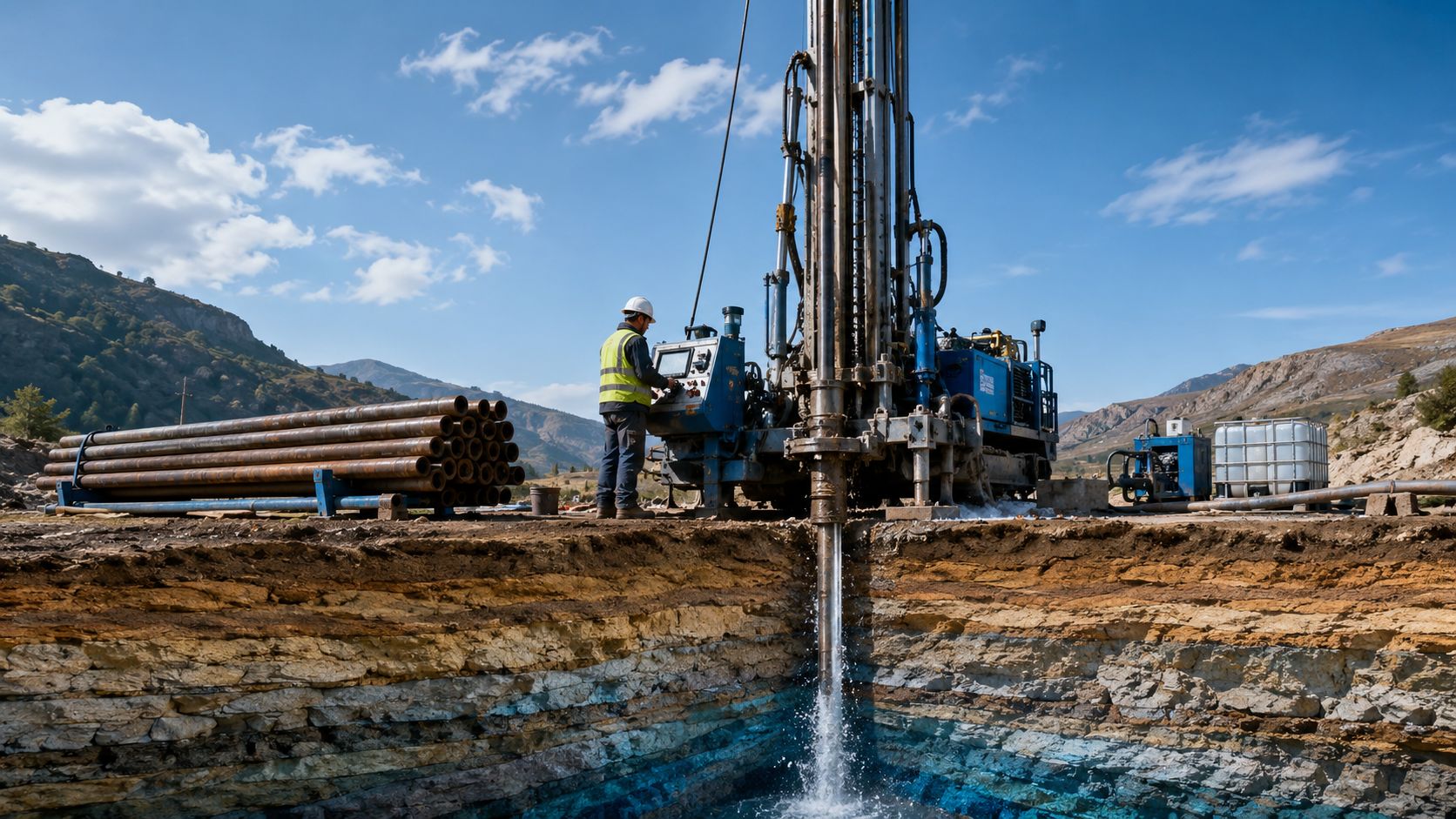
Drilling is the process of creating a hole in the ground or rock layers using specialized machines and equipment in order to reach underground resources or collect technical information about subsurface conditions. In its simplest form, drilling means penetrating soil or rock to a certain depth to access water, minerals, geothermal resources, oil, natural gas or geological data.
Drilling is not used only for finding water. It is also widely used in construction projects, mining operations, geothermal research, infrastructure works and geological investigations. For this reason, drilling is one of the most important field applications in many engineering and industrial sectors.
Why Is Drilling Performed?
The purpose of drilling depends on the project. In some cases, drilling is carried out to open a water well. In other cases, it is used to examine ground conditions before starting a construction project. In mining, drilling helps determine the location, depth, quality and distribution of underground mineral reserves.
The main purposes of drilling include:
Reaching underground water sources
Investigating mineral reserves
Performing soil and ground investigations
Identifying geothermal resources
Exploring oil and natural gas
Collecting rock and soil samples
Analyzing ground conditions for buildings, roads, bridges and dams
From this perspective, drilling is not just a simple hole-making operation. It is a technical process that requires engineering knowledge, proper equipment and field experience.
How Is Drilling Done?
The drilling process is planned according to the type of work, ground conditions and target depth. First, the drilling area is examined. The terrain, accessibility, geological structure and project requirements are evaluated. Then, the proper drilling machine, rods, drill bits, core barrels, pumps and auxiliary equipment are selected.
A typical drilling process includes the following steps:
Site inspection is carried out.
The drilling point is determined.
The drilling rig is positioned and installed.
The drilling operation begins.
Samples or technical data are collected.
The borehole or well is completed.
Testing and control procedures are performed.
Not every drilling project follows the same method. Equipment used in soft soil conditions is different from equipment used in hard rock formations. Therefore, selecting the right drilling equipment directly affects the success, speed and safety of the operation.
Types of Drilling
Drilling is used in many different industries, so it can be classified into several types. The most common drilling types are water well drilling, geotechnical drilling, mineral exploration drilling, geothermal drilling, oil and gas drilling, and core drilling.
Water Well Drilling
Water well drilling is performed to reach underground water sources. It is commonly used for agricultural lands, farms, gardens, residential areas, industrial facilities and production plants that require a reliable water supply.
The main goal of water well drilling is to reach clean and usable water with sufficient yield. For a successful result, the geological structure, groundwater level, depth and borehole design must be evaluated carefully.
Geotechnical Drilling
Geotechnical drilling is used to determine the bearing capacity, layer structure and underground characteristics of the soil before construction. It is especially important for buildings, bridges, highways, viaducts, dams and industrial facilities.
Through geotechnical drilling, engineers can understand whether the ground consists of rock, clay, sand, fill material or loose soil. This information helps design safer and more suitable foundation systems.
Mineral Exploration Drilling
Mineral exploration drilling is used to investigate underground mineral reserves. In this field, core drilling is often preferred because it allows cylindrical rock samples to be extracted from the ground.
These core samples are analyzed in laboratories to determine mineral content, rock quality, fracture structure and reserve potential. Mineral drilling plays a critical role in understanding whether a mining area has economic value.
What Is Core Drilling?
Core drilling is a drilling method used to obtain cylindrical rock or soil samples from underground formations. It is widely preferred in mineral exploration, geotechnical investigations and geological research.
A core sample allows experts to examine underground layers without completely disturbing their natural structure. This makes it possible to analyze rock type, strength, cracks, mineral content and formation properties more accurately.
Equipment Used in Drilling
Drilling operations require different types of equipment working together. The equipment used may vary depending on the drilling method, ground conditions and target depth.
Common drilling equipment includes drilling rigs, drill rods, drill bits, core barrels, diamond bits, mud pumps, casing pipes, well pipes, filter pipes, compressors and lifting accessories.
High-quality equipment improves drilling efficiency, safety and operational performance. This is especially important in deep drilling and hard rock conditions.
Conclusion
Drilling is a technical process used to reach underground water, minerals, geothermal resources and energy reserves, as well as to collect information about soil and rock formations. It has a wide range of applications and each drilling project requires its own method, equipment and expertise.
A successful drilling operation depends on proper site selection, suitable equipment, experienced personnel and technical planning. Drilling is not only about making a hole in the ground; it is about understanding the underground structure, using resources efficiently and providing safe data for future projects.