What Is a Drilling Bit? Types, Uses and Selection Criteria
What Is a Drilling Bit? A drilling bit is one of the most important components used in drilling operations. It is the part that comes into direct contact with soil, rock or underground formations and performs the actual cutting, crushing or grinding action. No matter how powerful a drilling rig is, the performance of the operation largely depends on the bit working at the end of the drill string.
What Is a Drilling Bit?
A drilling bit is one of the most important components used in drilling operations. It is the part that comes into direct contact with soil, rock or underground formations and performs the actual cutting, crushing or grinding action. No matter how powerful a drilling rig is, the performance of the operation largely depends on the bit working at the end of the drill string.
In field conditions, every formation behaves differently. A soft clay layer may be passed through quickly, while a hard rock layer can slow the entire operation down within minutes. This is why choosing the right drilling bit is not a small technical detail; it is one of the main decisions that affects speed, cost, equipment life and overall drilling quality.
A drilling bit should not be seen as a simple rotating metal part. A properly selected bit reduces unnecessary stress on the machine, protects drill rods, improves penetration rate and helps create a cleaner and more stable borehole.
What Does a Drilling Bit Do?
The main function of a drilling bit is to open a borehole by breaking, cutting or wearing down the formation. During drilling, the bit works under pressure and rotation, depending on the drilling method used. It creates the path that allows the drilling system to move deeper into the ground.
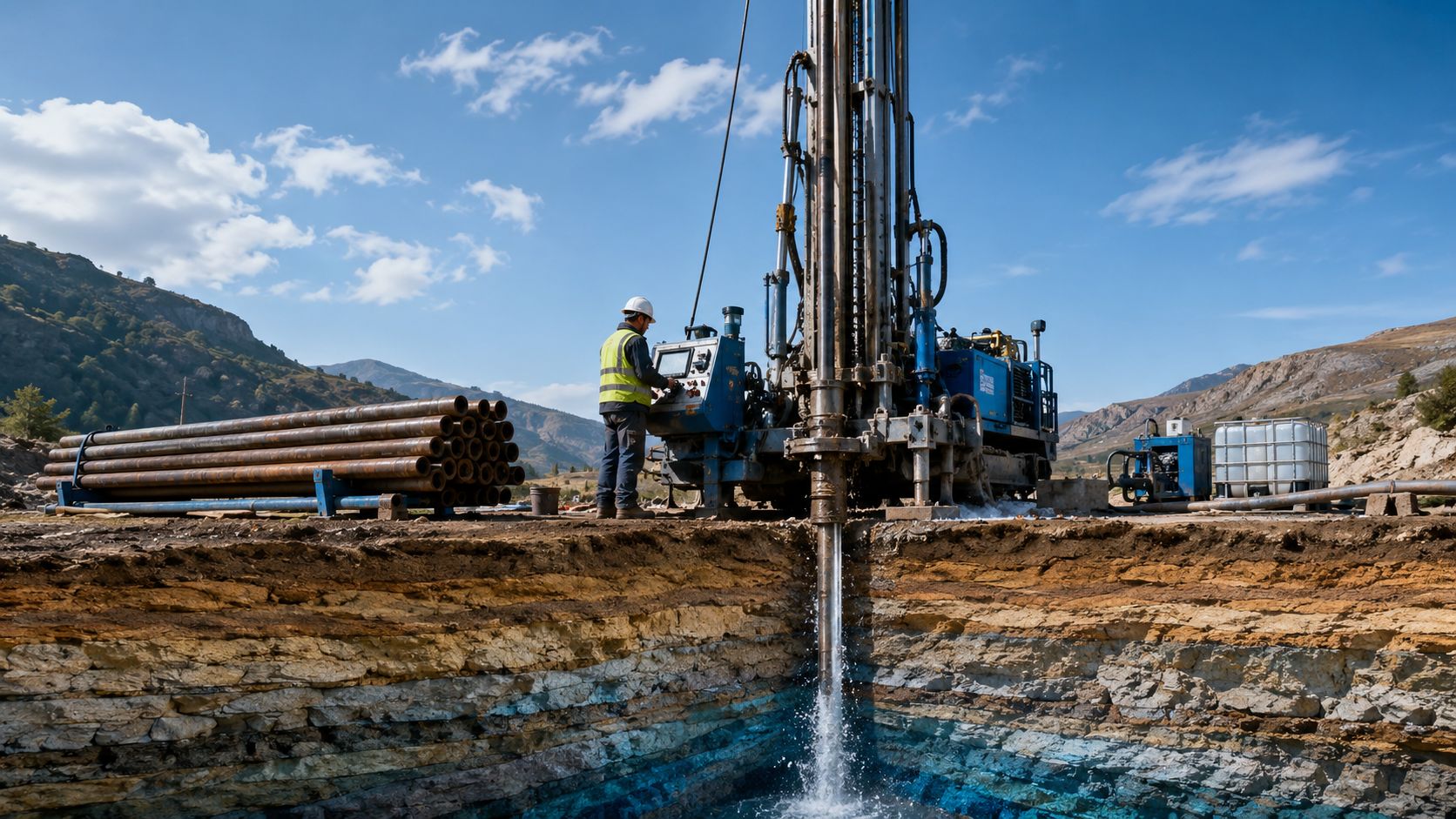
In water well drilling, the goal is to reach groundwater-bearing formations. In mineral exploration, the bit helps access rock structures and obtain meaningful samples. In geotechnical drilling, it supports the investigation of underground layers before construction projects.
Drilling bits are commonly used to:
Drill soil and rock formations
Open boreholes at the required diameter
Improve penetration in hard formations
Support core recovery in core drilling
Increase efficiency in water, mining, geothermal and geotechnical drilling
Help the drilling rig and rods work more smoothly
In simple terms, the drilling bit is the working edge of the entire drilling operation.
Where Are Drilling Bits Used?
Drilling bits are used in many different industries. Since each project has different ground conditions and technical goals, the type of bit used may also change.
Drilling Bits in Water Well Drilling
In water well drilling, bits are used to reach underground water-bearing layers. These projects may involve different formations within the same borehole. The upper layers can include soil, clay, sand or gravel, while deeper sections may contain hard rock.
If the wrong bit is used, drilling can become slower, the borehole diameter may become unstable and the equipment may be overloaded. In deep wells, bit durability becomes even more important because every bit change means lost time and additional operational cost.
Drilling Bits in Mining
In mining and mineral exploration, bit selection is a more sensitive subject. The goal is not only to drill a hole but also to understand the underground rock structure. For this reason, diamond core bits are widely used in core drilling operations.
Mining formations are often hard and abrasive. A bit used in these conditions must cut efficiently and resist wear. A low-quality or unsuitable bit can damage the core sample, reduce drilling speed and increase the total cost of the project.
Drilling Bits in Geotechnical Investigations
Geotechnical drilling uses drilling bits to examine the underground conditions of a construction site. Before buildings, bridges, roads, dams or industrial facilities are built, engineers need to understand the structure and behavior of the ground.
In these operations, choosing the right bit helps obtain more reliable samples and data. Loose soils, clay layers and hard rock formations may require different bit types. The more suitable the tool, the more reliable the ground investigation becomes.
Drilling Bits in Geothermal Drilling
Geothermal drilling involves difficult conditions such as high temperature, pressure and depth. For this reason, drilling bits used in geothermal projects must be strong, stable and resistant to demanding formations.
In these projects, bit selection affects not only performance but also safety and operational continuity. A failure at depth can create serious time loss and cost.
Types of Drilling Bits
Drilling bits are classified according to their cutting structure, application area, formation type and working principle. Not every bit performs well in every formation. A bit that works efficiently in soft ground may perform poorly in hard and abrasive rock.
Diamond Drilling Bit
A diamond drilling bit is a high-performance bit commonly used in hard rock formations. It is especially preferred in core drilling. The cutting surface contains natural or synthetic diamond particles designed to grind and cut hard formations.
Diamond bits are widely used in mineral exploration, geological research and geotechnical drilling. They provide controlled cutting and help recover cleaner core samples.
Main advantages of diamond drilling bits include:
High performance in hard rock formations
Better core sample quality
Longer service life in suitable conditions
Reliable performance in technical drilling projects
However, the right diamond bit must be selected according to rock hardness, abrasiveness, rotation speed, pressure and flushing conditions.
Core Bit
A core bit is used to obtain cylindrical samples from underground formations. These samples are called cores. Core bits are essential in mineral exploration and ground investigations because they allow experts to study the natural structure of rock or soil.
The recovered core can be tested in a laboratory to analyze rock type, strength, fractures, mineral content and formation properties. For this reason, a core bit is more than a cutting tool; it is a key part of collecting reliable underground data.
Tricone Bit
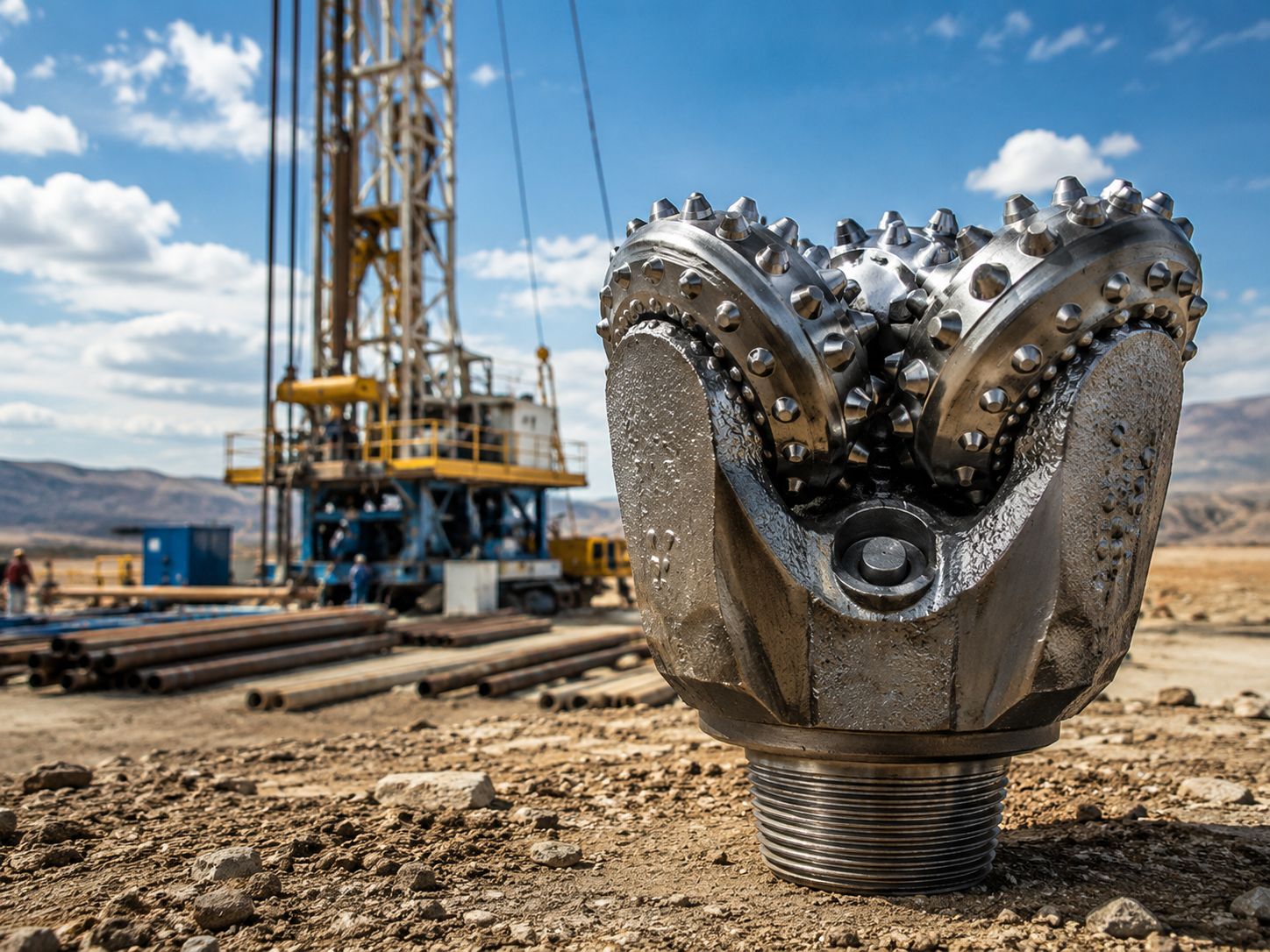
A tricone bit has three rotating cone-shaped parts. These cones crush and break the formation while rotating. Tricone bits are commonly used in water well drilling, oil and gas drilling, and some geotechnical applications.
They can be manufactured for soft, medium or hard formations. Tooth structure and bearing design vary according to the intended use. Choosing the right tricone bit depends heavily on formation hardness and drilling conditions.
PDC Bit
PDC bits are designed with durable cutting elements that can provide high penetration rates in suitable formations. They are often used in oil, gas, geothermal and deep drilling applications.
These bits can be very efficient when the formation is compatible with their cutting structure. However, they may not perform equally well in all geological conditions. Before using a PDC bit, the formation should be evaluated carefully.
Button Bit
Button bits are commonly used in percussion and down-the-hole drilling systems. Their button-shaped cutting inserts break the rock through a combination of impact and rotation.
They are used in water well drilling, mining, quarrying and hard rock applications. Their robust structure makes them suitable for demanding site conditions.
Drag Bit
Drag bits are generally used in soft to medium formations such as clay, sand and loose ground. They offer an economical solution in suitable conditions and have a relatively simple design.
However, drag bits are not suitable for hard rock formations. If used in the wrong ground, their performance drops quickly and wear increases.
How to Choose the Right Drilling Bit
Choosing a drilling bit should never be a random decision. A wrong bit can slow the operation, increase fuel consumption, damage equipment and raise total project cost.
The main points to consider are:
Formation Type
The first factor is the ground or rock structure. Clay, sand, gravel, limestone, basalt, granite and fractured rock do not respond to the same bit in the same way. Hardness and abrasiveness are key factors in bit selection.
Drilling Depth
As depth increases, durability becomes more important. In deep drilling, changing a bit is time-consuming and costly. For this reason, stronger and longer-lasting bits should be preferred in deep operations.
Borehole Diameter
Every drilling project may require a different borehole diameter. Water wells, core drilling, geotechnical works and geothermal projects have different technical needs. The bit diameter must be compatible with casing pipes, rods, core barrels and other equipment.
Rig Power
The drilling rig’s power must match the selected bit. An aggressive bit used with an underpowered rig may not perform properly. On the other hand, using the wrong bit with a powerful machine can damage equipment.
Rotation Speed and Weight on Bit
A drilling bit must work within the correct rotation and pressure range. Applying too much pressure does not always mean faster drilling. In many cases, it reduces bit life, damages rods and lowers borehole quality.
Flushing and Cooling
During drilling, the bit heats up and cuttings must be removed from the borehole. Water, mud or air circulation must be maintained properly. Poor flushing can reduce bit life and cause operational problems.
Why Quality Matters in Drilling Bits
A good drilling bit does more than last longer. It helps the rig work more smoothly, keeps the borehole stable and reduces unnecessary downtime.
Poor-quality or unsuitable bits may cause:
Slow penetration rate
Early wear
Poor borehole quality
Extra stress on drill rods
Higher fuel consumption
Damaged core samples
Longer operation time
Increased total cost
For this reason, purchasing decisions should not be based only on price. The real value of a drilling bit is measured by its performance in the right formation.
How to Extend the Life of a Drilling Bit
The service life of a drilling bit depends not only on manufacturing quality but also on how it is used in the field. A suitable bit can wear out quickly if it is operated with the wrong speed, pressure or flushing system.
To extend bit life:
Select the right bit for the formation
Avoid excessive pressure
Use the correct rotation speed
Maintain proper flushing and cooling
Keep the borehole clean
Check wear regularly
Avoid sudden impacts
Store and transport bits properly
Small field checks can prevent major failures. This is especially important in long and demanding drilling projects.
Drilling Bit Prices
Drilling bit prices vary according to type, diameter, cutting material, production quality, application area and durability. Diamond bits, tricone bits, PDC bits and button bits naturally have different price ranges.
Main price factors include:
Bit type
Diameter
Cutting material
Production quality
Formation compatibility
Application area
Durability
Technical specifications
The cheapest bit is not always the most economical choice. If a low-cost bit wears out quickly or slows the job down, it may increase the total cost of the project.
Is a Drilling Bit the Same as a Drill Bit?
In the field, the terms “drilling bit” and “drill bit” are sometimes used in similar ways. In technical usage, a drilling bit generally refers to the tool used in larger drilling operations such as water well, mining, geothermal or geotechnical drilling.
For SEO and practical communication, both terms are useful. Customers may search for “drilling bit,” “drill bit,” “core bit” or “water well drilling bit” depending on their needs.
Conclusion
A drilling bit is one of the most critical parts of a drilling operation. It cuts, crushes or wears down the formation and directly affects drilling speed, borehole quality, equipment life and total cost.
A successful drilling project requires more than a powerful rig. The right bit, correct operating parameters, proper flushing and experienced field use are all essential.
In real field conditions, the right bit often makes the difference between a smooth operation and a costly delay. That is why drilling bit selection should be treated as a technical decision, not just a purchasing detail.